How to Get a Brazilian SIM Card as a Foreigner

Lucas Weaver
Entrepreneur & Developer
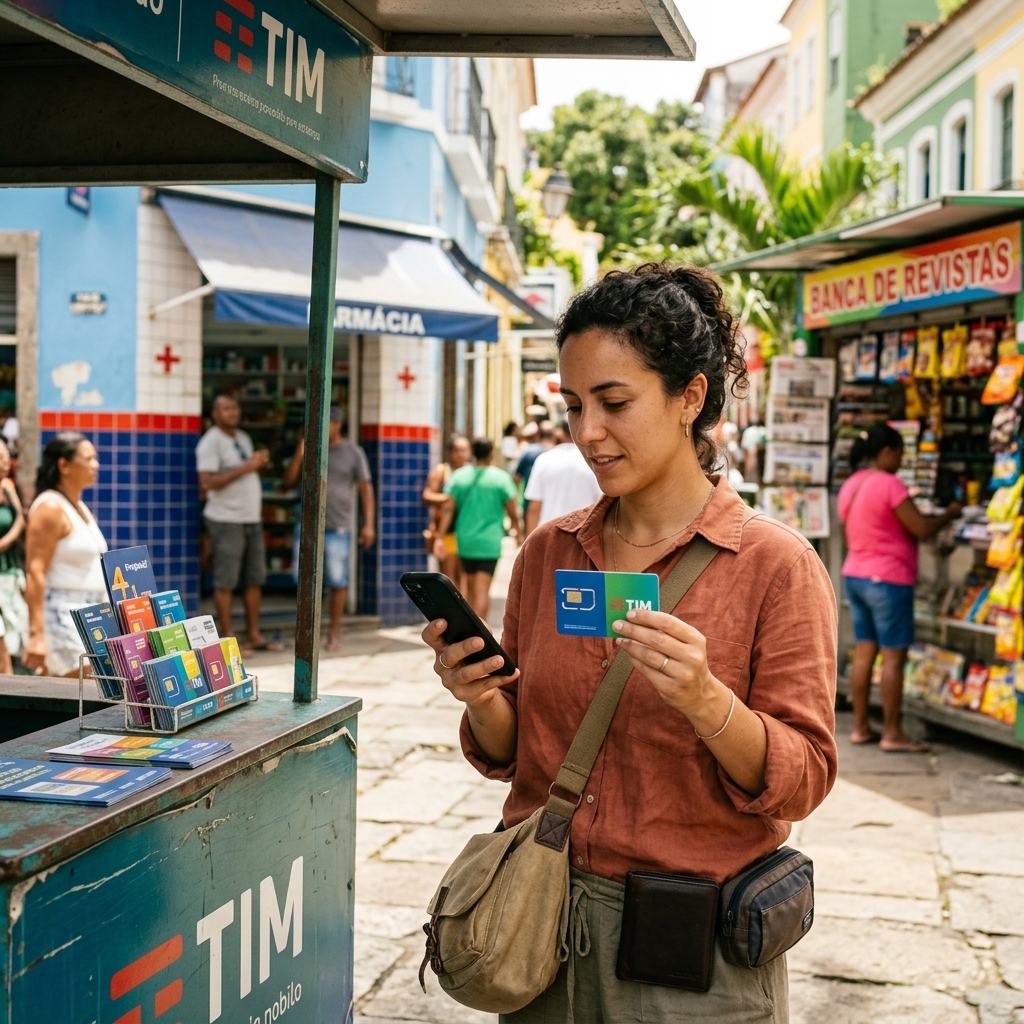
Table of Contents
The Short Answer: Buy a Physical TIM SIM Card in Brazil
The first Brazil SIM card mistake I remember was not dramatic. It was me standing there with a phone that could take foreign SIMs, cash already spent, and an activation step asking for a Brazilian tax number I did not have.
That is the part that gets travelers. Not the buying. The CPF wall after the buying.
So if you’re a foreign traveler in Brazil and you don’t have a CPF, the move is a physical TIM SIM card. TIM has been the most reliable option in my experience because foreign visitors can activate it by phone with a passport number instead of getting stuck in the CPF maze.
The buying part is not the hard part. The activation is.
That’s the little trap: you buy a SIM from whatever kiosk looks convenient, walk away thinking the errand is done, and then the phone asks for a document you simply do not have. Brutal.
Physical local SIMs are also much cheaper than most travel eSIMs sold online, especially once you’re past the “arrival day” stage and actually need data for maps, rides, translations, and basic life.
So the simple version is this: buy a TIM Chip Top, put it in your phone, call 144, activate it with your passport details, and then manage the line in the MEU TIM app. If you want to buy Claro, Vivo, Oi, or another carrier, I’d only do that if you can walk into that carrier’s official store and get staff to help you activate it in person.
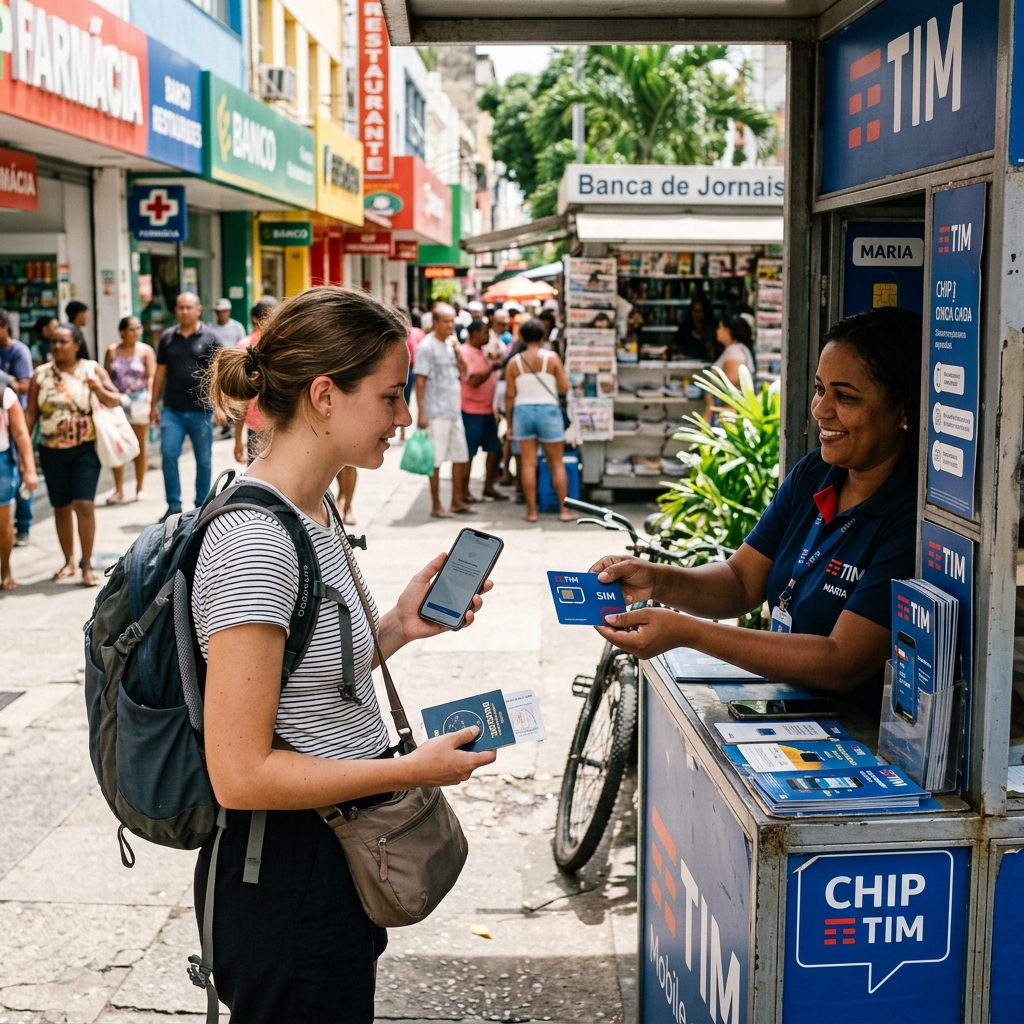
Why TIM Is the Safest SIM Card Choice for Foreigners Without a CPF
The CPF problem is one of those Brazil errands you don’t really understand until you’re standing there with a SIM package in your hand and the person at the counter is asking for a Brazilian tax ID.
You thought you were buying data. Suddenly you are in paperwork land, except you are a tourist and the one number everyone wants is the one number you do not have.
That is the specific mess TIM helps you avoid. Not magically. Not because every clerk in Brazil is suddenly a telecom genius.
But TIM has been the path that can work over the phone with a passport number, and that is the whole reason I’m so specific about it here.
The trap with other carriers is that the buying part can look completely normal. Someone sells you a Claro, Vivo, or other SIM.
The price is fine. The package looks real.
Then activation asks for a CPF, or the reseller does not know what to do with a foreign passport, and now your “quick SIM errand” has become a trip to an official carrier store.
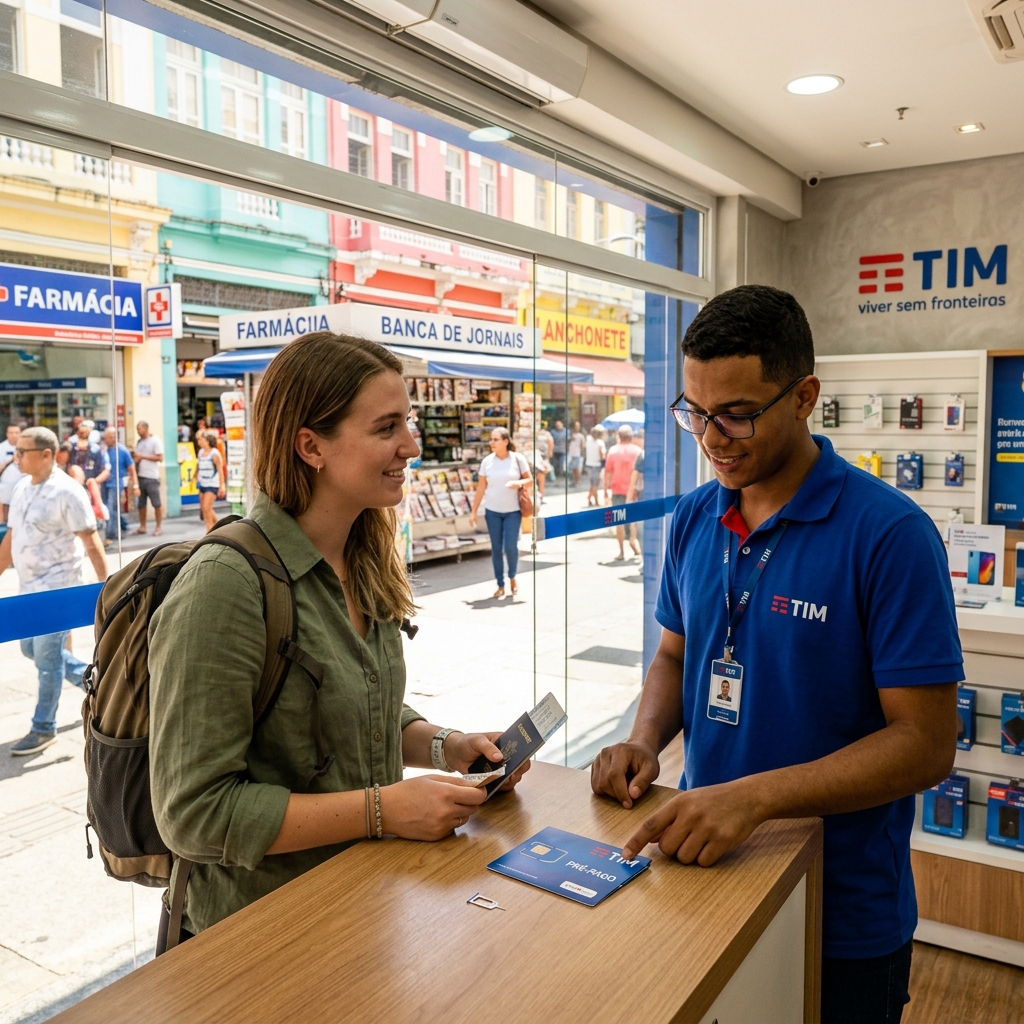
That official-store part is the key distinction. Claro, Vivo, or another carrier can work if you go to the actual carrier store and get the right person helping you.
If you’re buying from a kiosk, pharmacy, corner shop, or random reseller, though, TIM is usually the least annoying bet for a foreigner without a CPF.
So the rule is not “only TIM exists.” The rule is this: if you are not standing inside an official non-TIM carrier store with staff who can activate it for you, buy TIM.
The important question is not “can you buy the card?” It’s “can you actually activate the thing after you buy it?”
Where to Buy a TIM Chip Top in Brazil
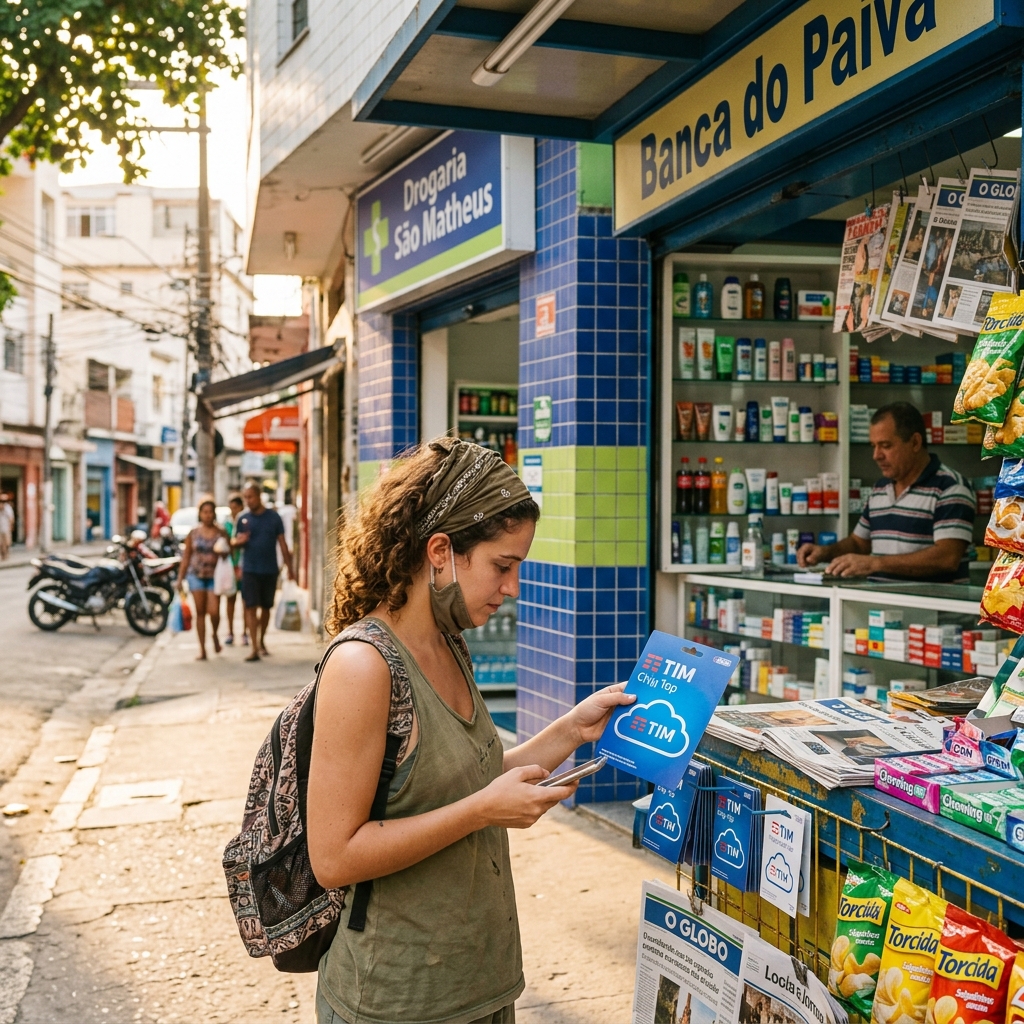
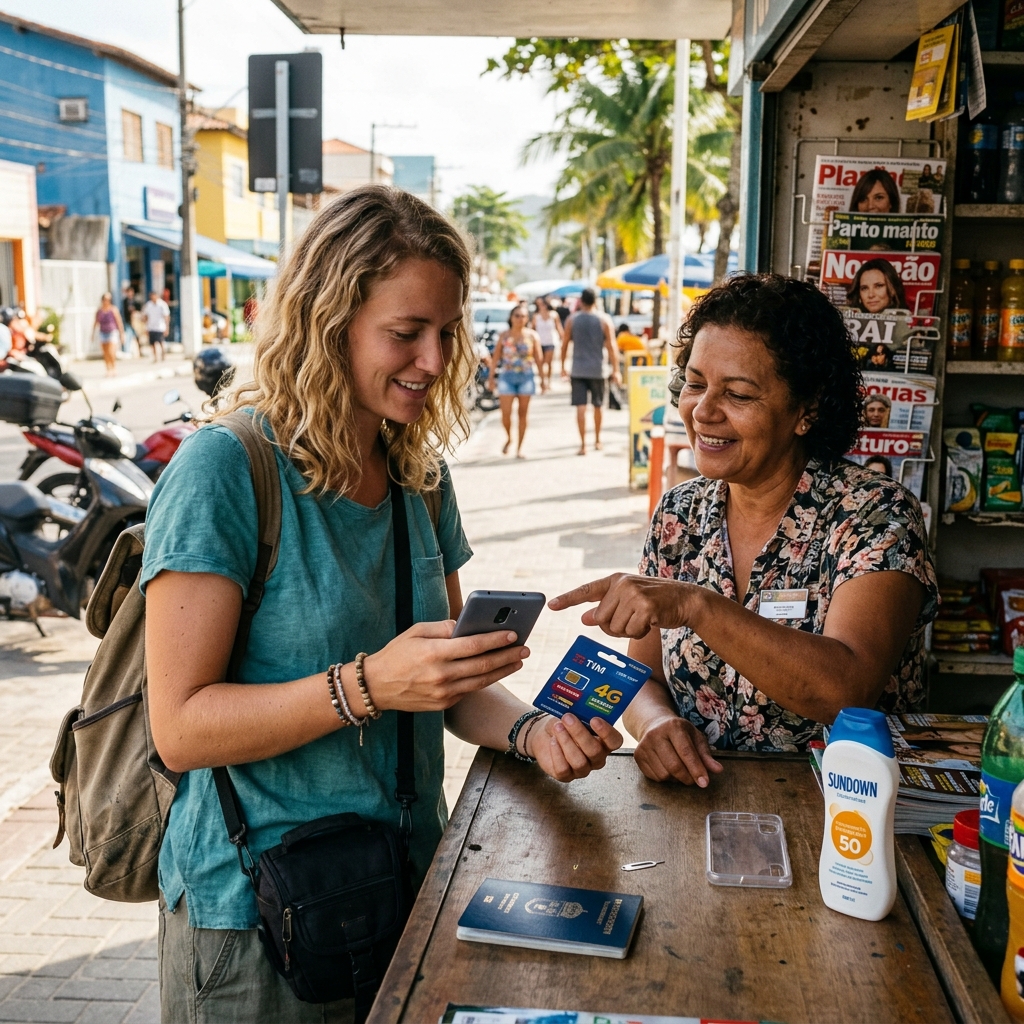
The place that saved me the most time was not a fancy phone store. It was the boring little newsstand kind of stop you barely notice until you actually need one.
That is where prepaid TIM chips often show up, and it beats wandering into random phone shops hoping someone knows the foreigner activation workaround.
Buying the SIM is the easy part. Getting it activated without a CPF is the annoying part, and that is where a lot of the random-shop advice starts to fall apart.
This is the little Brazil SIM-card walk of shame: one shop has chips but no useful activation help, another only has a different carrier, another person vaguely points down the street, and somehow a five-minute errand is eating the part of the day when you were supposed to be at the beach.
After that, the boring places start looking beautiful. Newsstands. Pharmacies. Convenience stores with prepaid cards near the register. Small phone accessory shops where the TIM logo is actually on the package, not just promised verbally.
Ask for “chip TIM” or “TIM Chip Top.” Keep the phrasing simple. You do not need to turn it into a whole speech.
If the first newsstand does not have one, pharmacies are probably the next best bet. They’re easier to find in normal neighborhoods than official phone stores, and they’re the kind of place you may already be walking past while buying sunscreen, water, or whatever small thing you forgot at the apartment.
Convenience stores, small phone accessory shops, supermarkets, and lottery-style retail points can also be worth checking.
Look for official TIM branding on the package. Ideally, buy a sealed, official-looking SIM from a normal retailer.
Be careful with some random unsealed SIM because someone swears they can “activate it later.” Maybe they can. Maybe they cannot. That uncertainty is exactly what you are trying to avoid.
If the seller can explain the carrier process, fine. If they can’t, move on. Brazil has a lot of places to buy a SIM, but not every place can support the activation a foreign visitor actually needs.
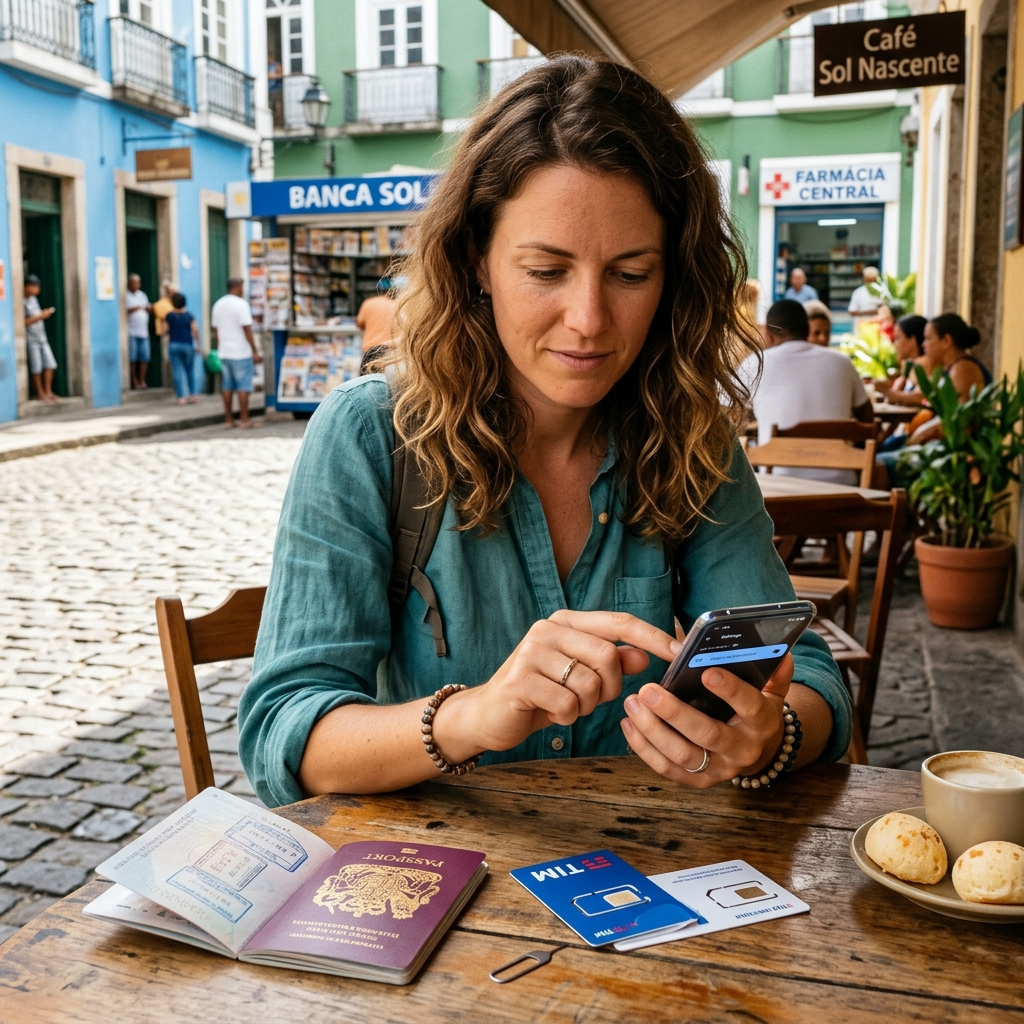
How to Activate a TIM SIM Card With Your Passport
The first few minutes after putting the SIM in were the part that made me feel like I had messed something up.
I expected some obvious confirmation. A welcome screen. A clean little “you’re connected” moment.
Instead, the phone just sat there. Very helpful. Very mysterious.
So if your phone does the same thing, do not immediately start changing every setting you can find.
Give the card at least 15 minutes to find the network. If it still looks dead, restart the phone.
Then wait again.
The phone may look useless for a while because the network can take time to register the SIM.
Before you try to activate it, turn off any VPN.
This is one of those tiny details that feels too small to matter until it quietly ruins the process. If the VPN is on, TIM services can act weird, and now you’re debugging the wrong problem.
Once the phone has had time to find the network, call 144.
Follow this path: press 3, press 3 again, then press *.
Yes, it feels a little ridiculous. Do it anyway.
After that, you should get through to an attendant. Give them your name, passport number, and the Brazil location where you’re staying when they ask.
After the call, the line may still act half-dead. That does not automatically mean you failed.
Wait one to two hours for the confirmation texts to come through, then restart the phone again.
Sometimes nothing seems to be happening. Then a stack of TIM texts arrives and the line starts behaving like a normal phone line.
Test it with a browser, WhatsApp, or a quick message once the texts come in.
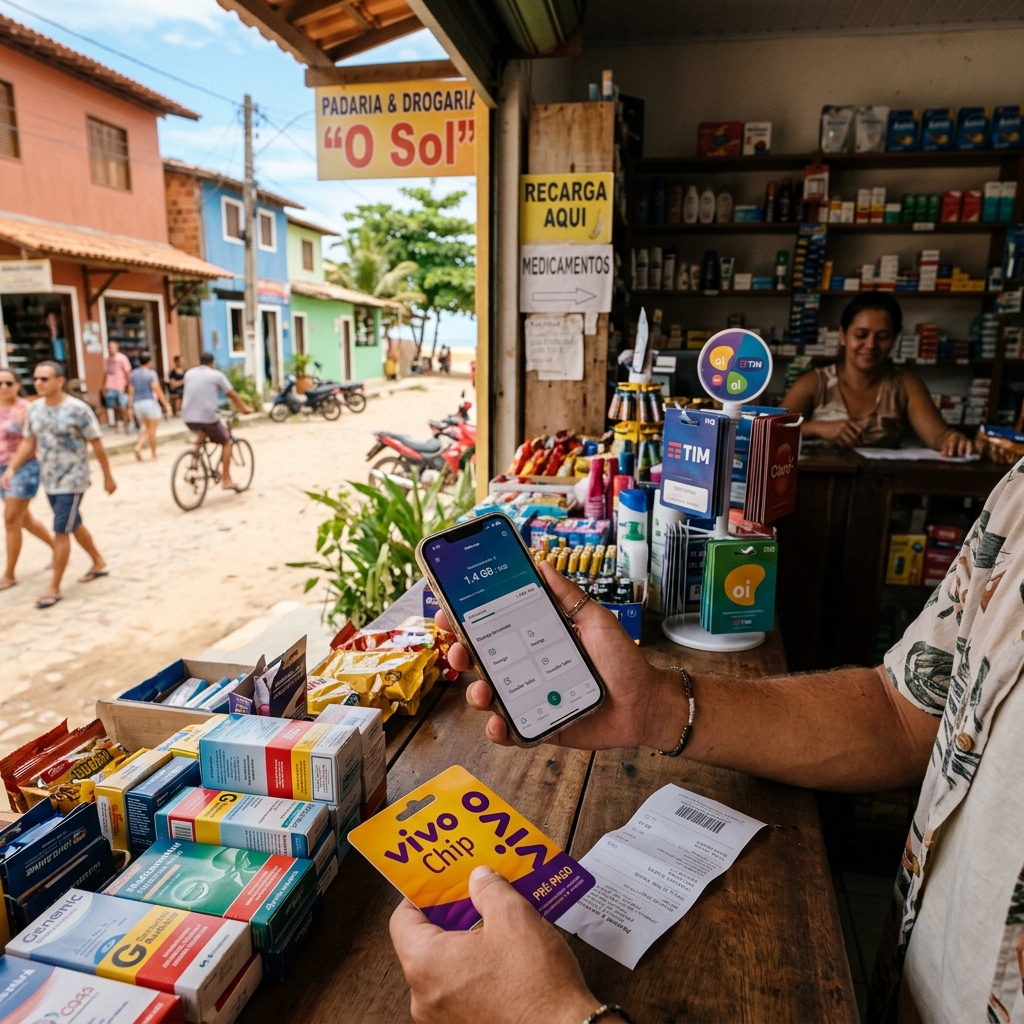
Setting Up the MEU TIM App and Topping Up Data
Once the line finally wakes up, usually after the activation texts, a restart, and a little waiting around like an idiot with no data, download the MEU TIM app.
That’s where you can check your plan details, remaining data, and whether the line is really alive or just pretending.
The app also helps with recharges, which matters if you’re staying longer than a few days.
You can top up in the app, but you can also use pharmacies, convenience stores, markets, and other recharge points around town when needed. Good backup plan.
Keep the SIM packaging and any activation texts until everything works reliably.
I’ve had enough travel annoyances to know that the one time you throw away a tiny paper slip is the one time someone asks for it again.
What I want here is simple: when you’re tired, sunburned, and trying to call a ride or pull up a map, the phone just works.
No Wi‑Fi scavenger hunt.
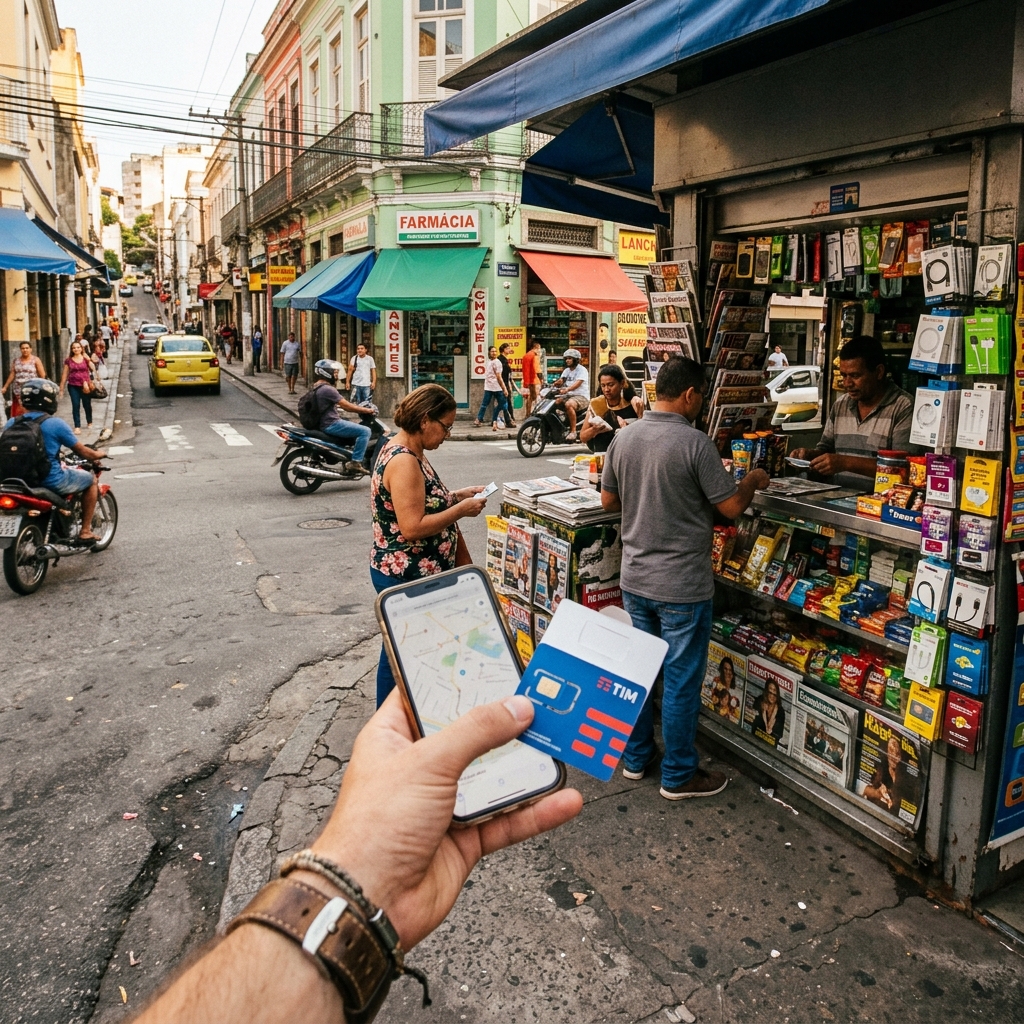
Where to Look for TIM Chips in Brazil’s Biggest Cities and Vacation Spots
The pattern I’d look for is pretty simple: busy blocks, normal shops, and places where locals are already buying phone credit or small electronics.
In Rio de Janeiro and São Paulo, start with newsstands, major pharmacies, malls, phone shops, and convenience stores in busy neighborhoods.
You’re not looking for some magical hidden counter. You’re just looking for normal retail places with enough foot traffic to stock SIMs.
In Salvador, Recife, Fortaleza, Florianópolis, and Brasília, start with pharmacies, shopping centers, and central commercial areas.
Those cities usually have more of the obvious retail density you need, especially if you’re landing and trying to sort your phone before dinner.
Beach towns and vacation spots like Itacaré, Pipa, and Ilha Grande can be trickier.
Availability can be thinner, so check small markets, pharmacies, newsstands, or phone accessory shops early in the day.
If you leave it until late afternoon in a smaller place, you may just waste time.
If you’re heading to a smaller destination, buy and activate the SIM before you leave a major airport city or state capital.
That saves you from trying to solve mobile data while already tired, hungry, and carrying a bag through a place with limited options.
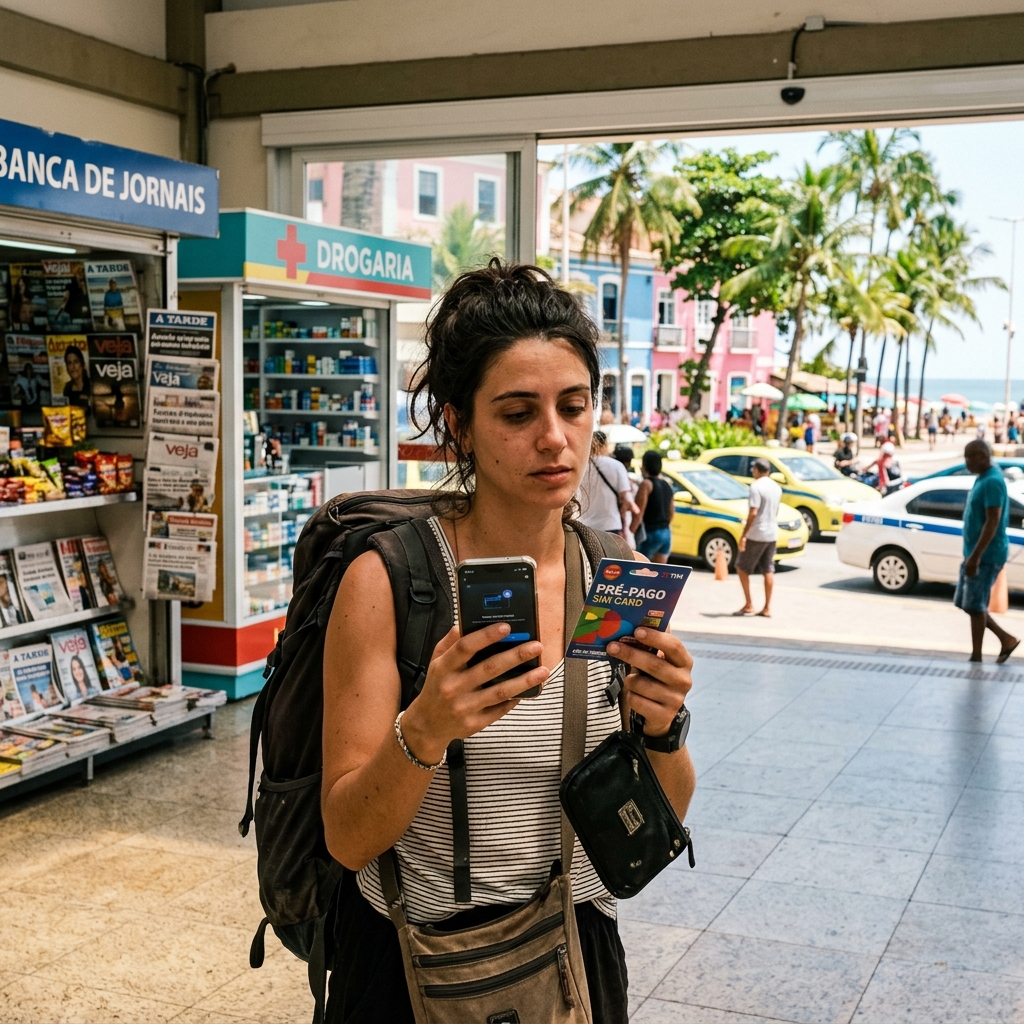
Why Most Travel eSIMs Are Not Worth It for Brazil
The eSIM panic makes sense before the trip.
You picture landing tired, needing WhatsApp, Uber, maps, and translation, and suddenly paying too much for data feels like the responsible adult move.
I’ve had that airport-brain spiral too. Fair enough.
Then Brazil starts doing normal Brazil things. You get through the first hour. You find Wi-Fi.
Then you see what a local SIM costs, and that tiny eSIM package from home starts looking less like preparation and more like a convenience fee wrapped around fear.
Be careful with the online recommendations too.
When every travel blog seems weirdly excited about the same few eSIM brands, remember that some of those lists are shaped by affiliate payouts.
That does not automatically make the recommendation bad. It does mean the “best” option on the page may be the best-paying option, not the cheapest Brazil data plan for you.
eSIMs can still make sense as arrival-day backup data.
If your phone supports them and you want to land with something already live, use one as a bridge.
Just don’t assume it should be your main plan for the whole trip.
If your phone supports a physical SIM and you can handle one short activation call, a local TIM SIM is usually the better value.
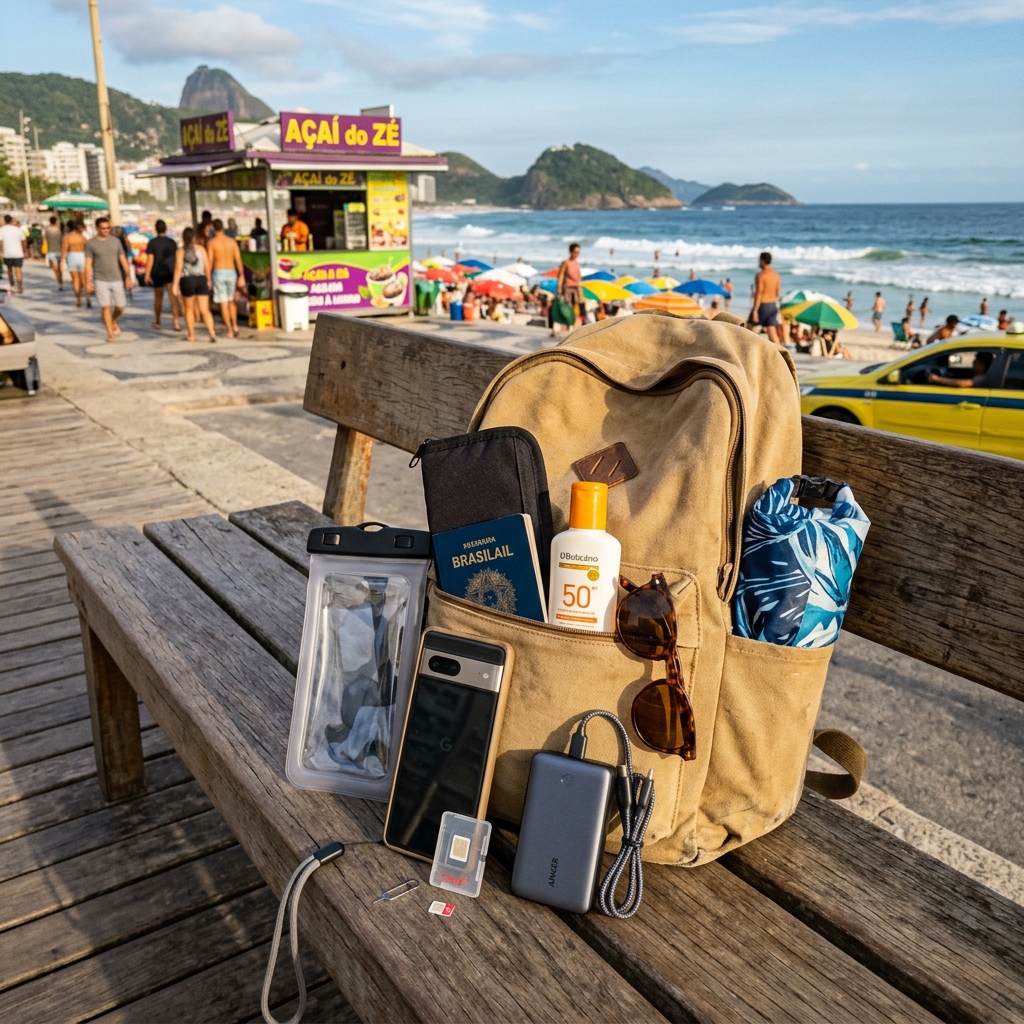
What to Pack Alongside Your Brazil SIM Card
A working SIM helps a lot, but it does not fix the dumb travel problems that show up five minutes later.
You’re at 4% battery trying to call a car. The wet swimsuit is touching the only dry thing in your bag.
Your passport is in the same easy pocket you keep opening for sunscreen, receipts, and random coins.
None of this is dramatic, but it can quietly wreck a beach day or make a travel day more stressful than it needed to be.
That was the packing lesson for me. Mobile data solved the “how do I get around?” problem.
It did not solve the phone-and-valuables problem once the day started moving.
A battery pack gets you through the boat ride, the long Uber wait, or the extra two hours where “we’ll be back soon” turns into dinner on the other side of town.
A waterproof case helps keep the beach day from turning into a rice-bag resurrection ritual.
A phone bracelet or theft-protection strap means your phone is not dangling out there like an offering every time you take a photo, check a map, or walk through a crowded area.
The under-clothes valuables wallet is the unsexy one, but it earns its place fast.
Passport, cards, backup cash — those are not things you want living in the same easy pocket you keep opening all day.
Swim trunks that actually work for a beach day help too, because Brazil has a way of turning “we’ll just walk around for a bit” into beach, sweat, boat seats, more walking, and then somehow still dinner.
These are the extra things I’d pack with a Brazil SIM card if I were setting up the trip again: beach gear, phone protection, a backup battery, and an under-clothes valuables wallet.
If you already own all of that, great. Pack it before you fly.
If you don’t, we put together a Brazil vacation kit on Amazon with those basics in one place.
Once you land, get the SIM working, and start moving between beaches, taxis, boats, and airports, you probably do not want your next errand to be hunting for a charger or valuables pouch.
Quick TIM SIM Card Checklist for Foreign Travelers
The annoying Brazil phone problem usually shows up at the worst time: you’ve just landed, your airport Wi-Fi is fading, and some shop clerk is asking for a CPF you don’t have.
I learned to treat this as a “handle it before you need it” errand, not a cute little side quest.
So I’d keep the checklist simple: buy a TIM Chip Top from a newsstand, pharmacy, store, or other local retailer.
Put it in your phone, wait, restart, turn VPN off, and call 144 for passport-based activation.
If you’re considering another carrier, only do it if you can activate the SIM at an official store with real staff help.
Otherwise, you’re taking on extra friction for no good reason, and that friction is not cute when you’re trying to order a ride or message your Airbnb host.
After the call, download MEU TIM, confirm service, top up if needed, and keep your phone safety gear with you.
And if any specific shop or carrier process has changed since this was written, confirm it on the ground before you count on it.
Get the SIM sorted early, then go back to the fun version of Brazil travel: finding the beach, keeping your battery alive, and not turning every small errand into a Wi-Fi scavenger hunt.
Hopefully we’re just getting started.