Why You Shouldn’t Compare São Paulo to Rio de Janeiro
Lucas Weaver
Entrepreneur & Developer
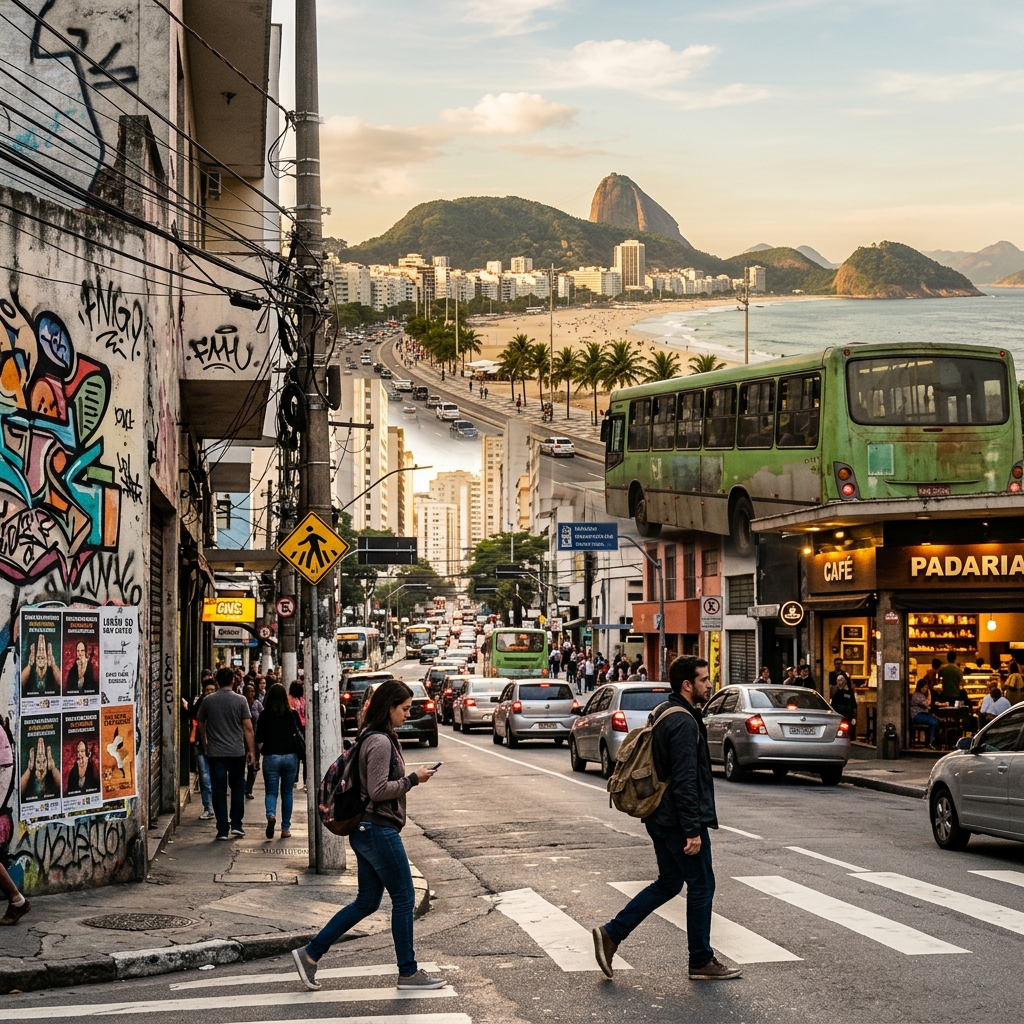
Table of Contents
The Rio high is the wrong setup for São Paulo
The first time I did Rio and São Paulo back to back, I remember landing in São Paulo with sand still in my shoes, sunburn on my face, and Rio still playing in my head like a highlight reel. For a minute, I understood why people mess this up.
Rio pulls you in fast. You wake up near a beach, spend the day staring at mountains that look almost fake, and then somehow you’re still in a huge city with real nightlife, real money, real energy. It feels like the city is performing for you a little, and I mean that as a compliment.
Then you fly to São Paulo a few days later, maybe because the cheaper flight is there, maybe because you’re connecting somewhere else, maybe because you’re heading to Iguacu Falls. And if you arrive with Rio still in your head, São Paulo can feel flat for about ten minutes.
I had that little drop too, where part of me was waiting for the ocean, the cliffs, the instant postcard. If you hit São Paulo right after Rio, you’re comparing a working city to a vacation city, and that comparison is unfair.
Rio breaks the usual city comparison rules
I remember being in the middle of normal city life in Rio and still feeling like the beach was pulling the whole day toward it.
Then I’d look up between buildings and the landscape would interrupt whatever I was doing.
That’s the weird thing about Rio. The beach doesn’t feel like a weekend add-on. The mountains don’t feel like a postcard in the distance.
They’re just there, mixed into normal city life.
Most cities have a skyline, maybe a river, maybe a decent park. Rio has world-class beaches, dramatic landscape, forests, and huge-city energy all colliding in one place.
When a city gives you that much at once, it becomes a bad measuring stick for everywhere else. You start expecting other places to compete on the same terms, even when they were never trying to do that.
Barcelona is the closest comparison, and even that falls short
Barcelona is the closest city I’ve personally been to in terms of the beach-plus-city feeling. You can spend time in the city and still feel the pull of the water, and that combination makes the comparison to Rio obvious.
But Rio’s scale is different. The beaches, the mountains, the sheer visual drama of the place hit harder. Barcelona is beautiful. Rio feels almost absurd at times.
I’m not saying Rio is “better” in some simple overall ranking. I’m saying it is so unusual that using it as a baseline for anything else can make the next city look unfairly ordinary.
São Paulo belongs in a different category
I think I understood this best after doing what a lot of travelers do.
You spend time in Rio, still carrying that Rio high, and then try to make São Paulo answer the same question.
On paper, people lump Rio and São Paulo together because they’re both in Brazil and close enough that they end up in the same trip plan. That makes sense on a map.
It makes less sense once you actually spend time in both.
São Paulo feels closer, at least to me, to New York, Paris, or Madrid. Not because it copies any of them.
It’s more that the reward is buried in the same kind of way.
You start to feel it neighborhood by neighborhood. After a long meal. A late night. A meeting or conversation that runs longer than expected.
There’s always this sense that there’s probably another room in the building you haven’t walked into yet.
If you arrive looking for Rio’s instant hit, the beach, the mountains, the skyline doing half the work before you’ve even made a plan, São Paulo can feel like it is withholding something.
I’d say you have to move through it differently. Give it more time, come back to the same areas, follow the food, the business energy, and the nightlife.
And accept that you probably missed half of what mattered the first time through.
The mistake is visiting São Paulo through Rio-colored glasses
I think the trap starts the moment you arrive in São Paulo with Rio still in your body.
You’ve just come from beaches, mountains, and views that keep interrupting normal life. Then suddenly you’re in this huge, gray, working metropolis.
You’re in traffic. You’re passing neighborhood after neighborhood. A lot of it does not reveal itself as quickly.
If you’re still craving obvious natural spectacle, of course it can feel a little underwhelming at first.
It’s like going from a coastal postcard straight into a massive, complicated machine and acting surprised that the machine doesn’t glitter the same way.
For me, it usually takes a minute to notice what I’m doing. I’m still carrying Rio’s cliffs and beaches around in my head.
Then I start grading São Paulo on a test it never signed up to take.
That’s where people get it wrong, I think. São Paulo asks for a different kind of attention.
You might be looking for one kind of magic in a place built to deliver another.
Both cities have problems, but neither should be reduced to them
I’ve had moments in both Rio and São Paulo where Brazil’s economic and social crises were not some abstract thing in the background.
It might be a short walk where the mood of a block changes faster than you expected. Or the way a beautiful café, apartment building, or beachside view can sit close to something much harder.
You feel the inequality and the pressure, but you feel them as part of daily life, not as the whole story.
That’s why I’m a little cautious about turning every honest observation into a safety essay or a crime essay.
Travelers can feel that tension without pretending it is the only thing the cities contain.
The truth is probably messier than the lazy version. I’ve walked through parts of both cities feeling that contradiction in real time.
The problems are there. So is the energy that makes the place extraordinary.
In Brazil, that’s not an abstract idea. You feel it walking around.
Once São Paulo clicks, it becomes one of the best cities in the world
I think I started to get São Paulo in pieces, not all at once.
A long meal that turned into another drink. A neighborhood I didn’t understand in the afternoon that made more sense at night.
A street that looked plain the first time, then somehow became part of my mental map.
After enough of those little moments, São Paulo starts to click. The neighborhoods start to feel less random.
The food gets ridiculous.
The scale of the place stops feeling anonymous and starts feeling alive.
Then there’s the culture, the business energy, and the nightlife. You get this constant sense that people are starting projects and making plans.
Catching up with friends. Arguing over dinner. Heading somewhere with purpose.
It’s a slower build than Rio, at least to me. Rio hits you right away.
São Paulo takes longer.
But I think that slower build is the point. Rio is an outlier. São Paulo is probably better understood as a world-class metropolis of a different kind.
When I catch myself expecting Rio’s drama from São Paulo, I miss the city that is actually in front of me.
You may not like São Paulo right away. But if you dismiss it because it wasn’t Rio, you may not have really given it a chance.
That’s why I think people should stop ranking Rio and São Paulo against each other, and start getting to know them for the unique cities they actually are.